 Micronesia Sun Bright News from the Deep Pacific
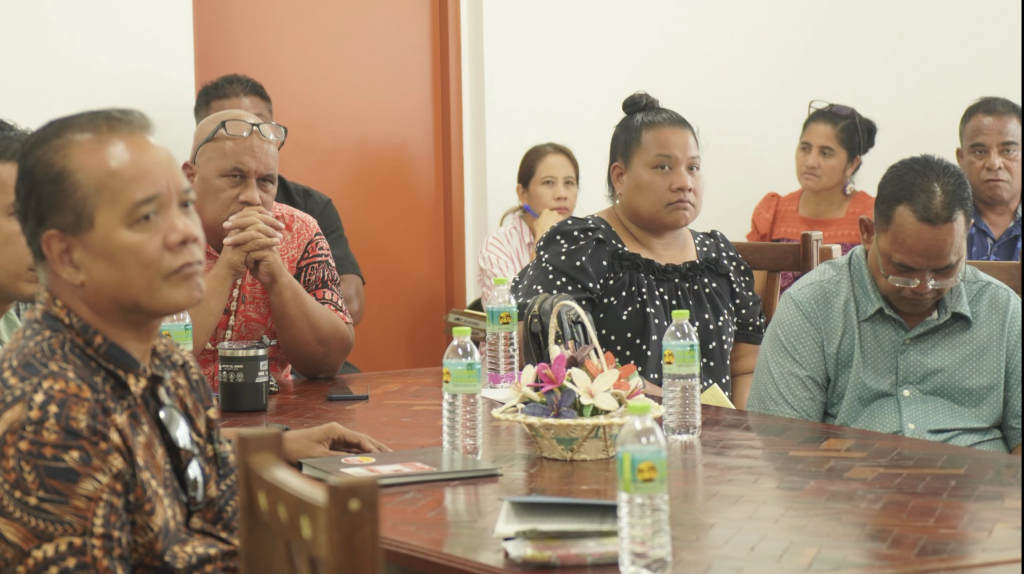
Photo Sources: Pohnpei State Public Information, Office of the Governor
By Christopher Cottrell
June 24, 2026, Federated States of Micronesia__Pohnpei Governor Stevenson A. Joseph and Lt. Governor Herolyn S. Movick convened a cabinet briefing to plan against the impending El Niño system.
According to the Pohnpei State Public Information, Office of the Governor, “The Pohnpei State Government wants to reassure everyone that while an El Niño is coming, we are in a period of planned preparation, not an active emergency. During the briefing, the leadership explicitly agreed that our Southern Islands are the most vulnerable areas during a drought, meaning they will receive close attention and priority support to protect against early water shortages.”
Coordinated with the Pohnpei Weather Service Office, the Department of Environment, Climate, and Emergency Management (DECEM), and the International Organization for Migration (IOM), preparations are in motion to “finalize early intervention measures and align state efforts with national support frameworks.”
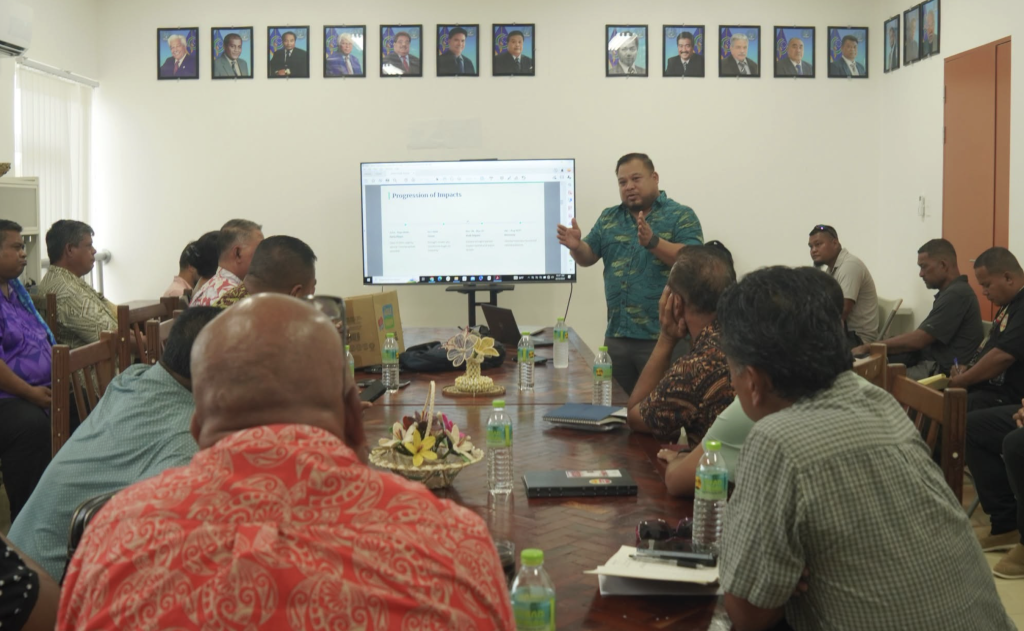
Based on the El Niño Advisory issued by the National Oceanic and Atmospheric Administration (NOAA) on June 11, 2026, they have devised an action timeline:
–June–September 2026 (Preparation Window): Anticipated higher-than-average rainfall will continue initially. The official onset of the system is not projected until October.
–November 2026–March 2027 (Peak Impact): A 63% probability exists for a strong event, historically comparable to 1997–1998. Drier conditions will peak in January, February, and March, with projected rainfall dropping to 1 to 4 inches. This period carries a high drought risk, lower sea levels, and a moderate risk of 3 to 5 regional tropical cyclones.
–April–August 2027 (Recovery Phase): Weather patterns are projected to stabilize and return to baseline levels.
DECEM officials Abby Lambert and Joey Seiola explained that “while lower sea levels present a risk for coral bleaching, and peripheral storm activity near the Marshall Islands or Kosrae could trigger heavy localized rain and landslides, these factors are actively factored into state contingency plans.”
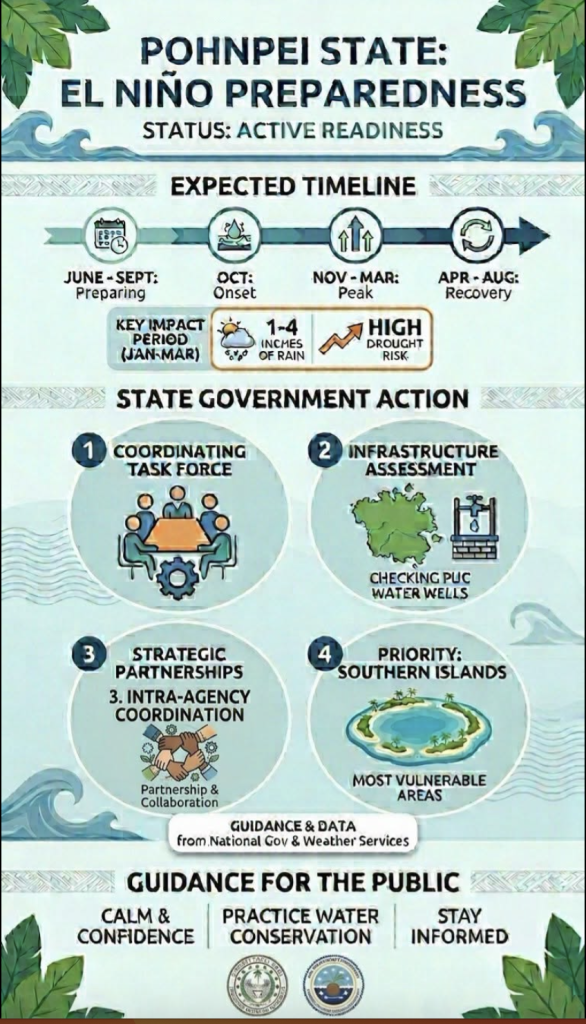
The statement reads:
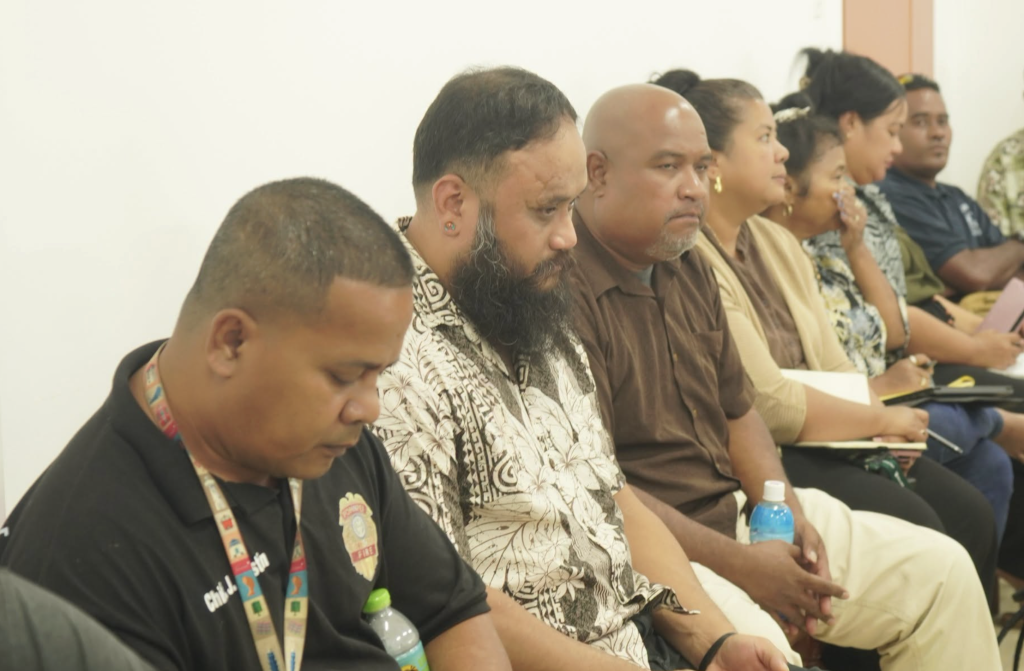
“–Task Force Activation: Governor Joseph has directed the convening of the Pohnpei State’s Disaster and Emergency Task Force to immediately start work on action plans.
–Strategic Historical Review: Emergency management teams are extracting data from the previous drought response plan executed early in this administration to apply proven, locally tested operational solutions to the current situation.
–Grid Integrity and Well Assessment: The Pohnpei Utilities Corporation (PUC) has been ordered to conduct an immediate, exhaustive inventory of all municipal water wells to confirm the exact number of assets and verify their functional status.
–International Partner Engagement: Active coordination is underway with International partners and Pohnpei Utilities Corporation (PUC) to safeguard water and sanitation access across school sites, and with IOM to pre-position Reverse Osmosis (RO) water purification units.
–A Message of Calm and Partnership to the Public. The Pohnpei State Government values the public’s vigilance and welcomes the community’s focus on this critical environmental shift. Visible indicators, such as the initial browning of vegetation, are anticipated natural markers of the cycle and do not represent a failure of public utilities.
–The Pohnpei Weather Service Office will continue to track and publish weekly rainfall metrics to maintain open lines of communication. Residents are assured that their government is fully engaged, prepared, and structurally equipped to manage this environmental cycle safely and confidently.”